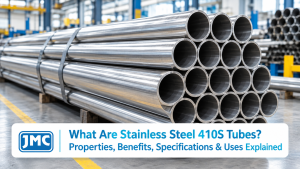
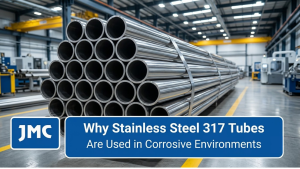
Steel pipes carry water, steam, crude oil and process gas across construction sites, refineries, factories and automotive plants. They also serve as structural columns and heat exchanger tubes. The steel pipe grade you pick decides how the line behaves under pressure, heat and corrosive media, and a wrong call shows up as leaks, scaling or premature replacement within a few years. Buyers comparing grades of pipes work from price alone, then discover the material never suited the service. Carbon, alloy, duplex and stainless families each answer a different service problem. Which steel pipe grades actually fit your application?
This blog breaks down the best grades of steel pipe, what separates one from the next, and where engineers specify each one.
1. Stainless Steel (304 & 316)
Stainless steel is one of the most popular choices for pipe manufacturing, particularly in environments that require high corrosion resistance.
304 Stainless Steel
304 stainless steel pipes are highly resistant to corrosion and oxidation, making them an excellent choice for general applications where exposure to moisture, chemicals, or extreme weather conditions is expected. It is versatile, durable, and has a high resistance to rust, which makes it ideal for industries like food processing, pharmaceutical, and medical.
316 Stainless Steel
316 stainless steel pipe is known for its superior resistance to corrosion, especially against chloride environments (like seawater). This makes it perfect for marine applications or highly corrosive environments such as chemical processing or coastal regions. It is commonly used in the pharmaceutical, chemical, and marine industries.
Best For: Food & beverage, chemical industries, marine applications.
2. Carbon Steel (A106, A53)
Carbon steel pipes are widely used due to their strength, affordability, and versatility. The carbon content in these pipes gives them greater strength but can make them more susceptible to corrosion.
A106 Carbon Steel Pipe
This grade is used for high-temperature applications like boilers, heat exchangers, and pressure vessels. A106 pipes are seamless and designed for carrying fluids and gases under high pressure. It offers great mechanical properties and resistance to oxidation.
A53 Carbon Steel Pipe
A53 is another common grade of carbon steel pipe, often used for structural and pressure applications. It is commonly seen in the construction of buildings, bridges, and pipelines. It is also used in steam, water, and gas pipelines.
Best For: High-pressure systems, structural work, and fluid transportation.
3. Alloy Steel (P5, P9, P11)
Alloy steel pipes are engineered with specific additions of other elements like chromium, molybdenum, or vanadium. These elements enhance the properties of the pipe, such as heat resistance, strength, and wear resistance.
P5 Alloy Steel Pipe
P5 pipes are commonly used in high-pressure and high-temperature applications. With added molybdenum and chromium, these pipes offer excellent creep resistance and oxidation resistance, making them ideal for power plants and refineries.
P9 Alloy Steel Pipe
Alloy Steel P9 Pipes is designed for even higher temperatures than P5 and is typically used in steam systems and pressure applications. Its resistance to heat and corrosion under high pressures makes it suitable for industries like petrochemical, power generation, and refineries.
Best For: High-temperature, high-pressure applications, power plants, petrochemical industries.
4. Duplex Stainless Steel (2205, 2507)
Duplex stainless steel combines the best of both ferritic and austenitic steel, providing high strength and superior resistance to corrosion, particularly in chloride environments.
2205 Duplex Steel Pipe
This is one of the most widely used duplex stainless steels. It provides excellent resistance to corrosion and is twice as strong as standard stainless steel, making it ideal for offshore and marine applications, as well as in chemical and petrochemical industries.
2507 Super Duplex Steel Pipe
Super duplex steel pipes like 2507 have higher amounts of chromium and molybdenum, which improve the strength and resistance to corrosion even further. These pipes are typically used in extremely aggressive environments, including desalination plants, offshore platforms, and chemical industries.
Best For: Marine applications, chemical industries, oil and gas, desalination plants.
5. High-Performance Alloys (Inconel, Hastelloy, Monel)
For environments that require extreme resistance to heat and corrosion, high-performance alloys like Inconel, Hastelloy, and Monel are commonly used in pipe production.
Inconel Pipes
Inconel pipes are known for their excellent resistance to oxidation, corrosion, and high-temperature environments. They are commonly used in aerospace, power generation, and chemical industries, where temperatures exceed 1000°F (537°C).
Hastelloy Pipes
Hastelloy is a superalloy that resists corrosion, pitting, and stress cracking in harsh environments. It is commonly used in chemical processing and other severe service applications, especially where high temperature and extreme chemical environments are present.
Monel Pipes
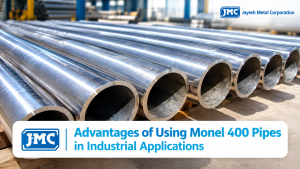
Monel is a nickel-copper alloy known for its excellent corrosion resistance, especially in marine environments. It is used in applications where high strength and resistance to sea water or aggressive chemicals are required.
Best For: Aerospace, chemical processing, marine applications.
6. Copper-Nickel (CuNi)
Copper-nickel pipes are known for their excellent resistance to corrosion, particularly in marine environments. The combination of copper and nickel gives the pipes a high resistance to seawater corrosion, making them ideal for marine applications.
Best For: Marine piping, desalination, and chemical processing.
Conclusion
Selecting the right grade of steel pipe depends largely on the specific requirements of the application. Whether it’s for high pressure, high temperature, resistance to corrosion, or strength, there’s a steel grade that fits the need. Stainless steel, carbon steel, alloy steel, duplex stainless steel, and high-performance alloys like Inconel and Hastelloy all offer unique advantages that cater to different industries.
If you’re unsure which grade of steel pipe is best for your project, it’s always wise to consult with a pipe manufacturer or supplier who can help guide you based on the environment and conditions in which the pipe will be used.