Corrosion Resistance of Stainless Steel 317 Tubes
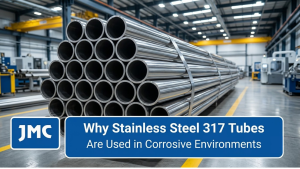
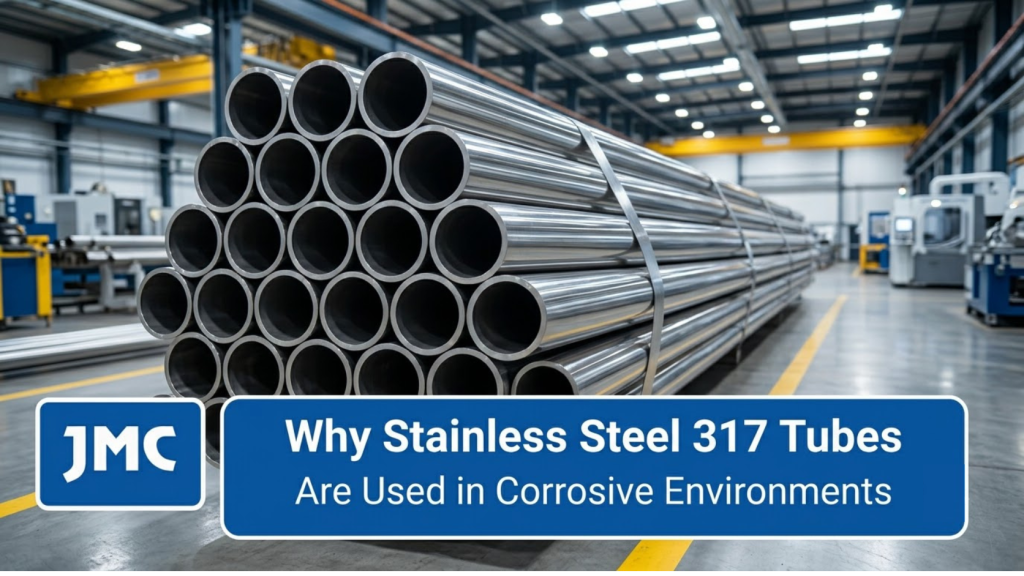
The primary reason for the specification of stainless steel 317 tubes over standard 300-series alloys is their corrosion resistance. The grade carries 18-20% chromium, 3-4% molybdenum, and 11-15% nickel, and 317L has the same chromium and molybdenum range with 11-13% nickel. Molybdenum does most of the work in that mix. The resistance to localized attack is increased beyond the capacity of plain chromium-nickel steels. This does not imply that the tube is impervious to all corrosive chemicals that it may encounter. SS 317 tubes still need to be matched against the actual process fluid, not selected on grade name alone, and Jayesh Metal works through that fit with buyers before an order goes out.
Role of Molybdenum in Corrosive Service
Molybdenum is the element that separates this grade from lower-alloyed austenitic steels. Higher chromium, nickel, and molybdenum content improves resistance to chloride pitting and general corrosion, and that improvement is most visible in service where chloride ions are present continuously rather than in short bursts. Pitting starts small, at a surface defect or a weak point in the passive film, then works inward. More molybdenum in the alloy slows that initiation step. It does not stop pitting under all conditions. The practical takeaway is that stainless steel 317L tubes and 317 both lean on this element for their pitting performance, and the exact chloride threshold still depends on temperature and concentration in the line.
Performance in Chemical Environments
Grade designation alone does not answer whether a tube will hold up in a given process. SS 317/317L is documented as resistant to a range of chemical substances, with use recorded in pulp and paper processing. That does not extend automatically to every acid, base, or solvent a buyer might be handling. Concentration matters. So does temperature, exposure time, and whether the fluid is static or flowing. A spec sheet is a starting point, not the final answer, and chemical compatibility should be confirmed against the specific service before the order is placed.
Low Carbon Content and Welded Performance
317 carries a maximum carbon content of 0.08%. 317L caps it at 0.035%. That difference matters most at the weld. During welding, carbon can combine with chromium at grain boundaries and form chromium carbides, a process known as sensitization. The chromium tied up in those carbides is no longer available to protect the surrounding steel, which leaves that zone more open to attack. Lower carbon in 317L reduces how much of this happens during heat exposure. It does not make stainless steel 317L tubes immune to corrosion after welding, it just narrows the window where sensitization becomes a problem. For fabricated assemblies with heavy welding, that narrower window is usually the deciding factor between the two grades.
High-Temperature and Corrosive Conditions
Some process lines run hot and corrosive at the same time, and that combination changes how a tube performs compared to either condition alone. Elevated temperature speeds up most chemical reactions, corrosion included, so a fluid that is manageable at ambient temperature can behave differently once the line runs hotter. Selecting tubing for these conditions means checking both variables together, not temperature rating and chemical resistance as separate boxes. Exact temperature limits should be confirmed against verified data for the specific service, not assumed from the grade name.
Strength, Fabrication and Tube Selection
Corrosion resistance is one input among several. Strength, formability, and weldability all shape whether a tube works for a given build, and so does the construction method behind it. 317 stainless steel tubes are supplied as seamless, ERW, welded, fabricated, and cold drawn welded (CDW) in round, square, rectangular, coiled, U-shaped, pancake coil, and hydraulic forms. Standards referenced across these products include ASTM A213, A249, and A269, along with ASME SA213, SA249, and SA269. Picking the right form and spec depends on the fabrication process downstream, bend radius requirements, and the finish the end application calls for.
Where Stainless Steel 317 Tubes Are Used
Pulp and paper processing is one documented application area for this grade, where chloride exposure and process chemicals both come into play. Other industries handling similar corrosive conditions may see comparable benefits, though those applications should be confirmed independently rather than assumed from adjacent use cases. The common thread across suitable applications is a process environment where general chromium-nickel resistance alone would fall short.
Choosing Stainless Steel 317 Tubes for Corrosive Service
Selecting between 317 and 317L comes down to a short list of practical checks: the corrosion environment itself, chloride exposure levels, chemical concentration, operating temperature, molybdenum content, how much welding the fabrication involves, and the tube construction, dimensions, and standard required for the job. Neither grade is automatically the better choice, the right one depends on what the fabrication and service conditions actually demand.
Jayesh Metal supplies stainless steel 317 and 317L tubes across these forms and specifications. Enquire with the team to work through grade selection for a specific application.